Discover The Surprising Impact of World War II on Norway

webmaster

노르웨이 제2차 세계대전 영향 - A cinematic shot depicting the initial moments of the German invasion of Norway on April 9,

Imagine a country renowned for its breathtaking fjords, serene landscapes, and a steadfast commitment to peace. Now, picture that tranquility shattered in a single, devastating dawn.

That’s precisely what happened to Norway on April 9, 1940, when its declared neutrality was brutally violated by Nazi Germany, plunging this peaceful nation into five years of occupation during World War II.

I’ve always been fascinated by how different countries faced this global conflict, and Norway’s story, for me, is particularly gripping. It’s not just a tale of invasion and hardship, but a powerful testament to the human spirit, resilience, and an unwavering fight for freedom that truly changed the course of its history.

You might think of other European battlegrounds when you hear “WWII,” but Norway’s strategic importance, especially for German naval operations and iron ore supply, meant its struggle was unique and profoundly impactful.

From the dramatic tales of the resistance, including daring sabotage missions that could have altered the entire war, to the everyday courage of civilians navigating rationing, constant surveillance, and the psychological toll of occupation, their experience was incredibly complex.

Many Norwegians found themselves in unimaginable situations, whether joining the underground movement or simply trying to survive a new, dangerous normal.

It’s a history that still echoes today, influencing everything from national identity to its very infrastructure. We often hear about the big battles, but what about the quiet heroes, the unsung acts of defiance, and the enduring legacy that shaped modern Norway?

The human stories behind the headlines are often the most compelling, showing us just how much people sacrificed and adapted when their world was turned upside down.

It’s a powerful reminder that history is rarely black and white, and the strength of a nation often shines brightest in its darkest hours. Ready to uncover these remarkable details and understand why Norway’s WWII experience remains so vital?

Let’s dive deeper into this incredible chapter.

The Sudden Storm: How Norway Fell

노르웨이 제2차 세계대전 영향 - A cinematic shot depicting the initial moments of the German invasion of Norway on April 9,

You know, it’s hard to imagine a country so dedicated to peace being thrust into such a violent conflict, almost overnight. When I first delved into Norway’s WWII story, I was struck by the sheer audacity of the German invasion.

On April 9, 1940, the Nazis launched Operation Weserübung, and it wasn’t just a slow creep across a border. No, they hit multiple Norwegian ports simultaneously, from Oslo in the south all the way up to Narvik in the north.

It felt like a punch to the gut for a nation that had so firmly declared its neutrality. I’ve often thought about what it must have been like to wake up that morning, hearing the rumble of aircraft or the distant thud of naval guns, realizing that your peaceful world was now utterly shattered.

The speed and scale of it were just overwhelming, a stark reminder that in wartime, declarations of neutrality can sometimes feel tragically fragile. The initial resistance, though valiant, was incredibly disorganized, as the country wasn’t prepared for such a swift and comprehensive attack.

The government and the King had to make incredibly difficult decisions on the fly, fleeing the capital as the invaders closed in. It was a chaotic, terrifying period, where people truly saw their lives, their homes, and their future dissolve before their very eyes.

The psychological impact of going from complete peace to full-scale war in a matter of hours is something I can only begin to comprehend.

The Blitzkrieg’s Northern Front

What truly astounded me was the precision, or rather, the brutal effectiveness of the German Blitzkrieg in Norway. They didn’t just walk in; they sent paratroopers, landed troops from warships, and used their air superiority to full effect.

Imagine, having German soldiers suddenly appearing on your streets, speaking a foreign tongue, demanding control. The element of surprise was absolutely devastating.

The Norwegian military, though brave, was small and largely designed for defensive skirmishes, not a full-scale invasion by a modern, highly aggressive army.

They fought fiercely where they could, famously sinking the German cruiser Blücher in the Oslofjord, which bought the royal family and government crucial time to escape.

That act of defiance, right at the start, has always stood out to me as a symbol of the fight that was to come. It was a desperate struggle, often fought with outdated equipment against a technologically superior foe, but the courage shown by those early defenders was truly remarkable and set a tone for the resistance that would follow.

The Cost of Unpreparedness

You know, it’s easy to look back and say “they should have been ready,” but hindsight is always 20/20. Norway genuinely believed its neutrality would protect it, a sentiment many European nations held onto perhaps a little too long.

I can empathize with that hope, that desire for peace. But the invasion laid bare the vulnerabilities. Their coastal defenses, while present, weren’t sufficient to stop a coordinated naval assault on multiple fronts.

The air force was practically non-existent compared to the Luftwaffe. For ordinary Norwegians, this meant a rapid shift from peacetime normalcy to the harsh realities of occupation.

Suddenly, every aspect of life was scrutinized, controlled, and potentially dangerous. The transition was so abrupt, so brutal, that it left an indelible mark on the national psyche, shaping how Norway would approach defense and international relations for generations.

It really hammers home how quickly fortunes can change, and how vital a robust defense truly is, even for the most peaceful of nations.

Living Under the Jackboot: Daily Life in Occupied Norway

When I think about occupation, my mind often goes to the grand acts of resistance, but what about the day-to-day grind? I’ve often wondered what it was truly like to wake up every morning knowing your country wasn’t your own.

For Norwegians, the five years under Nazi rule meant an entirely new and restrictive way of life. The Germans immediately imposed strict rationing on food, fuel, and clothing, making basic necessities a constant struggle.

I can only imagine the worry etched on parents’ faces, trying to feed their children with dwindling supplies, or the endless queues for scarce goods. But beyond the physical hardships, there was a profound psychological toll.

Free speech was gone, the press was heavily censored, and the Gestapo had a pervasive presence, creating an atmosphere of constant surveillance and fear.

You had to be so careful what you said, even to your neighbors, because you never knew who might be listening or who might be an informant. This wasn’t just about surviving; it was about navigating a moral minefield every single day, trying to retain your identity and dignity in a system designed to crush it.

Rationing, Resistance, and Resilience

Life under occupation quickly became a balancing act. Norwegians became incredibly resourceful, finding ingenious ways to cope with rationing. Black markets flourished, and people relied heavily on their ingenuity and community networks to get by.

I remember reading stories about families tending small gardens just to get fresh vegetables, or carefully mending clothes until they were threadbare.

But beyond mere survival, there was a quiet, pervasive resistance in daily life. This wasn’t always about sabotage; sometimes, it was about wearing a paperclip as a symbol of solidarity (linking together), or listening to forbidden BBC broadcasts in secret, or simply refusing to greet German soldiers.

These small acts of defiance were crucial for maintaining morale and a sense of national identity. It reminds me that resistance isn’t always a grand gesture; often, it’s the quiet, persistent refusal to give in, to compromise your values, that truly matters.

The Shadow of Collaboration

Of course, not everyone resisted. The occupation also brought the painful reality of collaboration, most famously through Vidkun Quisling’s fascist Nasjonal Samling party.

It’s a complex and somber part of Norway’s history, showing how war can tragically divide a nation. I often ponder what drives people to collaborate – was it ideological belief, opportunism, fear, or simply a desperate attempt to survive and perhaps gain some influence in a dire situation?

Whatever the motives, their actions deeply impacted the majority of Norwegians, who viewed them as traitors. This internal division created deep wounds that took years, even decades, to heal after the war.

The presence of collaborators meant an added layer of mistrust and danger, making the occupation an even more isolating and challenging experience for those committed to freedom.

It’s a stark reminder of the moral ambiguities that war often forces upon individuals and societies.

Advertisement

The Fjords as Fortresses: Norway’s Strategic Role

You know, sometimes geography isn’t just about beautiful scenery; it’s a huge factor in global conflicts. When I looked into why Norway was such a hot target for Hitler, it became crystal clear: its strategic location was absolutely vital.

Germany needed Norwegian ports as naval bases to project power into the Atlantic, particularly against Allied convoys. Think about it – those deep, sheltered fjords were perfect hiding spots for U-boats and warships, giving them direct access to shipping lanes without having to navigate the more heavily guarded North Sea.

Plus, Norway was a crucial supply route for Swedish iron ore, which Germany desperately needed for its war machine. Cutting off that supply or securing it was a huge priority.

So, for the Nazis, Norway wasn’t just a conquest; it was a strategic chessboard piece that could directly impact the Battle of the Atlantic and their industrial capacity.

It really puts into perspective how seemingly peaceful landscapes can become incredibly important military assets.

Atlantic Gateway and Iron Ore Lifeline

The immediate impact of Norway’s fall was felt across the Atlantic. With bases stretching up the Norwegian coast, German U-boats and surface raiders could extend their reach far into the ocean, wreaking havoc on Allied shipping trying to bring vital supplies to Britain.

I can only imagine the heightened tension on those convoys, knowing that enemy submarines could now emerge from a much wider range of areas. Simultaneously, securing the iron ore route from Narvik was a massive win for Germany.

This constant flow of high-quality iron ore was absolutely essential for their armaments industry, fueling tanks, planes, and artillery. It highlights how interconnected the war was – a battle in the Norwegian fjords could directly influence the strength of the German war machine on the Eastern Front or in North Africa.

It was a brutal reality check for the Allies, forcing them to dedicate significant resources to counter the new German naval threat emanating from Norway.

Allied Counter-Strategies and Resistance Support

The Allies weren’t blind to Norway’s strategic importance, of course. They immediately recognized the danger and began to devise counter-strategies. This meant not only trying to disrupt German shipping lanes but also providing covert support to the growing Norwegian resistance movement.

I often think about the daring British commando raids on Norwegian targets, like the famous Operation Archery at Vågsøy, which aimed to destroy German installations and boost Norwegian morale.

These missions were incredibly dangerous, often involving long journeys across treacherous seas, but they were vital for keeping the pressure on the Germans and showing the Norwegians that they weren’t forgotten.

The resistance, in turn, provided crucial intelligence to the Allies about German troop movements and naval activities, turning occupied Norway into a covert intelligence hub.

It’s fascinating how even under occupation, a nation can still play a critical role in the larger conflict through sheer determination and courageous covert operations.

Shadows of Resistance: The Fight From Within

The spirit of resistance in Norway is, for me, one of the most compelling aspects of their WWII story. It wasn’t a conventional army fighting open battles; it was a diffuse, deeply committed network of ordinary people doing extraordinary things.

Imagine risking your life every single day, not on a battlefield, but in your own town, your own neighborhood, simply by trying to undermine the occupier.

That’s what the Norwegian resistance, or “Hjemmefronten” (Home Front), was all about. From humble beginnings, it grew into a powerful force, encompassing everything from intelligence gathering and sabotage to underground newspapers and escape routes for refugees.

I’m always incredibly moved by the sheer courage of individuals who chose to stand up, often knowing the brutal consequences if caught. It wasn’t just about big explosions; it was about the quiet defiance, the meticulous planning, and the unwavering belief that their country would one day be free again.

This underground struggle truly embodied the soul of Norway during those dark years.

The Norwegian Underground’s Many Faces

The resistance wasn’t a monolithic entity; it was a diverse tapestry of groups and activities. You had your intelligence operatives, risking everything to collect information on German troop movements, fortifications, and naval activities, then relaying it to the Allies.

There were the saboteurs, carrying out daring raids on industrial targets vital to the German war effort, like the famous heavy water sabotage at Rjukan, which I still think about with awe.

This mission, aimed at crippling Germany’s nuclear ambitions, was incredibly risky and had potentially world-altering consequences. Beyond these high-stakes operations, there was the extensive network involved in helping Allied airmen and Norwegian refugees escape to Sweden or Britain.

And let’s not forget the crucial role of underground newspapers, distributing uncensored news and maintaining morale in a climate of strict German propaganda.

Every one of these facets, from the dramatic to the mundane, played a vital role in keeping the flame of resistance alive.

The Heavy Water Sabotage: A Game Changer

Among the countless acts of resistance, the heavy water sabotage at Vemork near Rjukan stands out as an epic tale of daring and strategic brilliance. For me, it encapsulates the incredible courage and strategic importance of the Norwegian resistance.

The Germans were trying to develop an atomic bomb, and heavy water was a key component. The Vemork hydroelectric plant was the only place in the world producing it in significant quantities.

A team of highly trained Norwegian commandos, flown in from Britain, executed multiple dangerous missions, first parachuting into the harsh Norwegian wilderness, then painstakingly planning and executing the destruction of the heavy water production facilities.

It wasn’t just a military operation; it was a scientific one, too, aiming to halt Germany’s nuclear ambitions. The sheer audacity, the treacherous conditions, and the profound potential impact on the war’s outcome make it a truly legendary story.

It’s a testament to how a small group of determined individuals can, against all odds, change the course of history.

Advertisement

A King’s Courage: Government in Exile and National Resolve

When the full force of the German invasion hit, King Haakon VII and his government faced an impossible choice: surrender or flee. They chose the latter, establishing a government-in-exile in London.

For me, this decision wasn’t just about preserving political continuity; it was a profound symbolic act that gave hope and legitimacy to the Norwegian resistance.

Imagine your beloved monarch, a figurehead of national identity, refusing to bow down to the invaders. That resonated deeply with Norwegians, both at home and abroad.

The government-in-exile became the legitimate voice of Norway on the international stage, working tirelessly to rally Allied support, organize resistance efforts, and ensure that Norway’s plight was not forgotten amidst the larger conflict.

It was a beacon of hope, reminding everyone that while the land was occupied, the spirit and sovereignty of Norway remained unbroken.

The King as a Symbol of Defiance

King Haakon VII’s steadfast refusal to capitulate to German demands, famously stating that he would abdicate rather than appoint a pro-Nazi government, truly solidified his place as a national hero.

I find his resolve incredibly inspiring. He was more than just a head of state; he became the living embodiment of Norway’s resistance, a symbol that transcended politics.

His broadcasts from London, despite the risks of listening, were vital for maintaining morale among the occupied populace. They reminded Norwegians that they were not alone, that their legitimate government was fighting for them, and that liberation would eventually come.

This leadership from afar was crucial for sustaining the psychological warfare against the occupiers and reinforcing the unity of the Norwegian people in their struggle.

Organizing the Fight from Abroad

The government-in-exile was far from a passive entity; it actively worked to organize and support the resistance back home. They established and funded intelligence networks, coordinated sabotage missions, and broadcast propaganda to counter German narratives.

They also raised and equipped Norwegian forces who fought alongside the Allies, including a significant merchant marine fleet that played a crucial role in wartime shipping.

I’ve always been impressed by the logistical challenges they overcame, trying to manage a covert war from a foreign land. It wasn’t easy, but their persistence ensured that the resistance had the resources and direction it needed to be effective.

This dual approach – fighting on the international stage and supporting the fight within Norway – proved incredibly powerful in keeping the spirit of freedom alive.

The Human Cost: Stories of Sacrifice and Survival

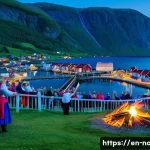
노르웨이 제2차 세계대전 영향 - An intimate, warm-toned portrait of daily life under German occupation in Norway. A Norwegian woman,...

Beyond the strategic maps and military maneuvers, the true impact of WWII on Norway lies in the countless individual stories of sacrifice, hardship, and unimaginable courage.

When I reflect on this period, it’s these personal narratives that really hit home. We often hear about the big numbers, but each number represents a life altered, a family torn apart, a dream shattered.

For many Norwegians, survival became an art form, a daily struggle against hunger, fear, and oppression. I’ve been particularly moved by accounts of those who lost loved ones to Gestapo brutality or in concentration camps, or those who spent years in hiding, their lives forever marked by the conflict.

It’s a sobering reminder that war isn’t just fought by soldiers; it’s endured by entire populations, leaving scars that run deep through generations.

Life in the Shadows: Imprisonment and Persecution

The occupation brought with it a terrifying regime of arrests, imprisonments, and executions. Thousands of Norwegians, suspected of resistance activities or simply being Jewish, were rounded up and sent to prisons or, horrifyingly, to concentration camps both within Norway and in Germany.

I cannot even begin to fathom the terror and despair of those held by the Gestapo, enduring torture and psychological torment. The stories of endurance and solidarity among prisoners are both heartbreaking and inspiring.

For example, the treatment of Norwegian Jews, many of whom were rounded up and deported to Auschwitz, represents a dark chapter of complicity and profound loss.

It’s a stark reminder that the fight for freedom often comes at an unimaginable personal cost, and the memory of these sacrifices must never fade.

Coping with Trauma and Loss

The end of the war brought liberation, but it certainly didn’t erase the trauma. I’ve heard so many stories about the long-term psychological impact on those who lived through the occupation.

Survivors carried invisible wounds – memories of fear, loss, and the constant threat of violence. Children who grew up during the war faced unique challenges, their formative years shaped by deprivation and instability.

The process of rebuilding wasn’t just about infrastructure; it was about healing a nation’s soul. People had to come to terms with the actions of collaborators, the loss of loved ones, and the profound changes in their society.

It’s a testament to the resilience of the Norwegian people that they managed to not only rebuild their country but also confront these difficult aspects of their past, ensuring that future generations would understand the true price of peace.

Advertisement

Beyond Liberation: Rebuilding a Nation’s Soul

The moment of liberation in May 1945 must have been an explosion of pure joy and relief, something I can only imagine. After five long, brutal years, Norway was finally free.

But the celebrations were quickly followed by the daunting task of rebuilding, not just physically, but morally and socially. I’ve often thought about how a nation heals after such a profound trauma.

It wasn’t just about repairing bombed-out cities or getting the economy running again; it was about restoring trust, dealing with collaborators, and redefining what it meant to be Norwegian after such a divisive period.

The energy and determination of the people to collectively move forward is truly inspiring, showing how a shared experience, no matter how painful, can forge an incredibly strong national identity.

Justice and Reconciliation

One of the immediate and critical tasks post-liberation was dealing with collaboration. This was a hugely complex and emotionally charged issue. I’ve read a lot about the legal processes, known as the “purge,” that followed the war, aiming to hold accountable those who had aided the Nazi regime.

Thousands were investigated, and many faced trials, imprisonment, or loss of civil rights. While controversial at times, these trials were a necessary step for the nation to process the betrayal and seek a form of justice.

It was a painful but vital process to restore a sense of fairness and national integrity, acknowledging the sacrifices of the resistance and sending a clear message about loyalty and responsibility.

It truly showed a commitment to addressing difficult truths head-on.

Aspect Pre-Occupation Norway Occupied Norway (1940-1945) Post-Liberation Norway
Political Status Neutral, Independent Monarchy German Occupation, Puppet Government (Quisling) Independent Monarchy, Rebuilding Democracy
Economy Growing Merchant Fleet, Fishing, Industry Rationing, German Resource Exploitation, Black Markets Post-War Reconstruction, Marshall Plan Aid
Social Life Peaceful, Democratic Norms Fear, Surveillance, Resistance, Collaboration Reconciliation, Justice, National Unity
International Role Neutrality Advocate Government-in-Exile, Allied Support NATO Member, Peacekeeping, Humanitarian Aid

Forging a New National Identity

The war profoundly shaped modern Norway’s identity. The collective experience of occupation, the bravery of the resistance, and the unwavering stance of the King and government-in-ex created a powerful narrative of resilience and unity.

I believe this shared history instilled a deep commitment to democracy, human rights, and international cooperation. Norway emerged from the war with a reinforced sense of national purpose, moving away from strict neutrality towards a more active role in global security, exemplified by its founding membership in NATO.

It’s a powerful testament to how even the darkest chapters can ultimately strengthen a nation, fostering values and commitments that continue to define it on the world stage today.

The scars are still there, but they are also a reminder of the incredible strength found in unity and the fight for freedom.

Unsung Heroes and Acts of Defiance

When we talk about WWII, the spotlight often falls on generals and grand battles, but what really gets to me are the stories of the everyday people who became heroes in their own right.

In Norway, countless individuals performed small, often anonymous acts of defiance that collectively formed the backbone of the resistance. It wasn’t always about blowing up factories; sometimes it was about hiding a Jewish neighbor, forging documents, or simply refusing to cooperate with the occupiers.

I’ve always felt that these unsung heroes are just as important as the more famous figures, perhaps even more so, because their courage came from a deeply personal place, often without any expectation of recognition.

Their quiet acts of bravery kept the flame of hope alive and showed that even in the darkest times, the human spirit can shine through.

The Power of Everyday Resistance

I truly believe that the strength of a nation under occupation isn’t just in its armed resistance, but in the myriad ways its people find to say “no” to the oppressor.

In Norway, this manifested in so many forms. Think about the teachers who refused to incorporate Nazi ideology into their curricula, facing arrest and internment for their principles.

Or the church leaders who spoke out against the persecution of Jews, offering sanctuary and spiritual guidance in defiance of the regime. There were also the artists and writers who subtly wove messages of hope and defiance into their work, keeping Norwegian culture alive.

These weren’t soldiers, but their actions were profoundly powerful, preserving the soul of the nation when its physical body was under siege. Their stories remind me that resistance is a spectrum, and every act, no matter how small, contributes to the larger fight for freedom.

Women’s Crucial Role in the Home Front

And let’s not forget the incredible contribution of women to the Norwegian resistance, often in ways that went unrecognized for too long. While men might have been more visible in sabotage operations, women were absolutely crucial to the functioning of the underground.

They ran safe houses, acted as couriers, collected intelligence, distributed illegal newspapers, and maintained vital communication lines, often carrying sensitive information right under the noses of German patrols.

I’ve heard countless stories of women showing astonishing courage, using their perceived “innocence” to their advantage, risking everything for the cause.

They were the silent backbone of the home front, ensuring that messages got through, that resistance fighters were fed and sheltered, and that the networks remained connected.

Their contributions were invaluable, and it’s so important to recognize that the fight for freedom was truly a collective effort, requiring every member of society to step up.

Advertisement

The Enduring Echoes: How WWII Shaped Modern Norway

It’s fascinating to see how historical events, even those long past, continue to ripple through a nation’s identity and policies. For Norway, the five years of occupation during WWII weren’t just a chapter in a textbook; they fundamentally reshaped the country, influencing everything from its foreign policy to its national psyche.

I often think about how deeply ingrained the lessons of neutrality’s failure became, leading to a profound shift in Norway’s approach to international security.

The experience truly underscored the importance of collective defense and strong alliances. It’s a powerful example of how a nation can learn from its darkest hours, transforming trauma into a foundation for a more secure and purposeful future.

A New Stance on Security and Alliances

One of the most significant and lasting impacts of the war was Norway’s abandonment of its long-standing policy of neutrality. The brutal reality of April 9, 1940, showed, in the most devastating way possible, that neutrality offered no guaranteed protection against aggression.

This led to a fundamental reassessment of its security strategy. I believe this experience was a primary driver behind Norway’s decision to become a founding member of NATO in 1949.

It was a clear statement that “never again” would they face such an invasion alone. This pivot towards collective security has defined Norway’s foreign and defense policy ever since, demonstrating a commitment to international cooperation and a pragmatic understanding of global power dynamics.

It’s a direct legacy of the WWII experience, still influencing their role on the world stage today.

Fostering National Unity and Resilience

Beyond foreign policy, the shared ordeal of occupation forged an incredibly strong sense of national unity and resilience among Norwegians. I’ve often felt that adversity can either break a nation or bind it together more tightly, and for Norway, it was definitely the latter.

The common enemy, the shared suffering, and the collective acts of resistance, both large and small, created a powerful sense of solidarity. This unity was essential not only for enduring the occupation but also for the monumental task of rebuilding the country after liberation.

It fostered a deep appreciation for democracy, freedom, and human rights, values that are still fiercely protected and cherished in Norway. The legacy of WWII isn’t just about the battles fought; it’s also about the enduring spirit of a people who refused to be defeated.

Closing Thoughts

Stepping back from the detailed accounts, what truly resonates with me about Norway’s WWII journey is the indomitable spirit of its people. From the shock of invasion to the quiet courage of daily resistance, their story is a powerful testament to human resilience. It reminds us that even when facing overwhelming odds, the commitment to freedom, justice, and national identity can never truly be extinguished. I hope this deep dive has offered you a fresh perspective on this pivotal chapter, and perhaps even sparked a renewed appreciation for the peace we often take for granted. It’s a story that continues to echo, offering invaluable lessons for us all.

Advertisement

Useful Information to Know

1. Norway’s unique geography, especially its deep fjords, made it a critical strategic target for Germany, providing excellent naval bases for U-boats and warships to control Atlantic shipping routes.

2. The decision by King Haakon VII and his government to flee rather than surrender provided a crucial symbol of resistance and legitimacy for the fight against occupation, operating from London.

3. The Norwegian resistance wasn’t just armed struggle; it encompassed a wide range of activities including intelligence gathering, sabotage (like the heavy water operation), underground newspapers, and aiding refugees.

4. Post-WWII, Norway abandoned its long-standing policy of neutrality, becoming a founding member of NATO. This shift was a direct result of the invasion’s devastating impact and the realization that neutrality didn’t guarantee safety.

5. The human cost of the occupation was immense, with widespread rationing, fear under Gestapo surveillance, and the tragic loss of life, yet it also fostered an incredible sense of national unity and resilience that defines modern Norway.

Key Takeaways

You know, when you really boil down Norway’s WWII experience, a few critical lessons emerge that I find incredibly powerful. First, the fragility of peace, even for a neutral nation, is a stark reminder of the importance of vigilance. Second, the sheer strength of ordinary people, in countless acts of both overt and quiet resistance, can be an unstoppable force against oppression. It wasn’t just the grand gestures; it was the daily refusal to yield that truly defined their spirit. Finally, the war irrevocably shifted Norway’s global outlook, moving from cherished neutrality to a firm belief in collective security. This transformation underscores how deeply historical events can reshape a nation’s core identity and its place in the world. It’s a story that tells us much about courage, adaptation, and the enduring quest for freedom.

Frequently Asked Questions (FAQ) 📖

Q: Why was Norway, a neutral nation, so strategically important to Nazi Germany during World War II?

A: That’s a fantastic question, and one I’ve pondered quite a bit myself when diving into this history. You see, on the surface, Norway was a peaceful, neutral country, but if you look at a map from a purely military perspective, its location was absolutely gold for the Germans.
First off, there was the iron ore. While not directly from Norway, a significant portion of Sweden’s iron ore, vital for Germany’s war machine, was shipped through the ice-free port of Narvik in northern Norway.
Controlling Norway meant securing that crucial supply line, especially during the harsh winter months when other routes froze over. But it wasn’t just about iron; it was about the sea itself.
Norway’s long, jagged coastline, with its deep fjords, offered perfect, sheltered bases for the German U-boats and naval vessels to launch attacks on Allied convoys in the Atlantic.
This was a game-changer for their naval strategy, allowing them to project power much further into the ocean and disrupt vital supply routes to Britain.
I’ve personally found that understanding this geographic advantage really unlocks why such a devastating decision was made to invade a neutral country.
It wasn’t about conquering land for its own sake; it was about control, resources, and naval dominance – truly a high-stakes chess match.

Q: What were some of the most impactful acts of Norwegian resistance during the occupation, and how did they contribute to the

A: llied war effort? A2: When I think about the Norwegian resistance, I honestly get chills. It wasn’t just a scattered effort; it was incredibly organized, often daring, and profoundly impactful.
While there were countless acts of sabotage, intelligence gathering, and helping refugees escape, one of the most legendary stories that immediately springs to mind is the “heavy water” sabotage at Rjukan.
This wasn’t just any mission; it was a desperate race against time to stop Nazi Germany from developing an atomic bomb. Imagine a team of highly trained commandos, mostly Norwegians, parachuting into the freezing Norwegian wilderness, enduring incredible hardships, and then executing a complex sabotage mission at the Norsk Hydro plant, which was producing heavy water for Germany’s nuclear research program.
The sheer guts it took to scale those cliffs, penetrate a heavily guarded facility, and destroy the equipment without a single shot fired (initially, anyway) is just breathtaking.
They really messed up Germany’s nuclear ambitions, setting them back significantly. Beyond this, the resistance provided invaluable intelligence to the Allies, organized escape routes for thousands, and maintained a vital sense of hope and defiance among the civilian population.
Their efforts, though often unseen, played a crucial role in undermining the German occupation and supporting the broader Allied cause. It truly shows that even in the darkest times, courage can ignite a powerful flame.

Q: How did the five years of German occupation permanently shape Norway as a nation, affecting its identity and future?

A: This question really hits home for me because it’s about the lasting legacy, how a brutal period can forge a nation’s soul. The occupation years were incredibly traumatic, but paradoxically, they also galvanized the Norwegian people in ways that continue to define them today.
For one, it profoundly strengthened their national identity and resolve. The shared experience of suffering under occupation, the collective acts of resistance, and the universal longing for freedom created an even deeper sense of unity and patriotism.
It wasn’t just about rebuilding bricks and mortar; it was about rebuilding a national spirit, stronger than ever. I’ve noticed that this experience ingrained a deep commitment to peace, international cooperation, and human rights into the Norwegian psyche.
It significantly influenced their post-war foreign policy, leading them to be strong advocates for multilateralism and humanitarian aid. Moreover, the hardship fostered a stronger sense of community and solidarity, which I believe contributed to the development of their robust welfare state.
People learned to rely on each other, to share what little they had, and to value collective well-being. It’s a powerful testament to how a nation can emerge from its darkest hour not broken, but transformed, carrying the scars of the past but also the invaluable lessons learned about resilience, unity, and the enduring fight for what’s right.

Advertisement