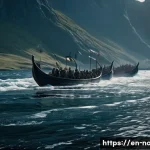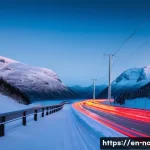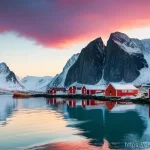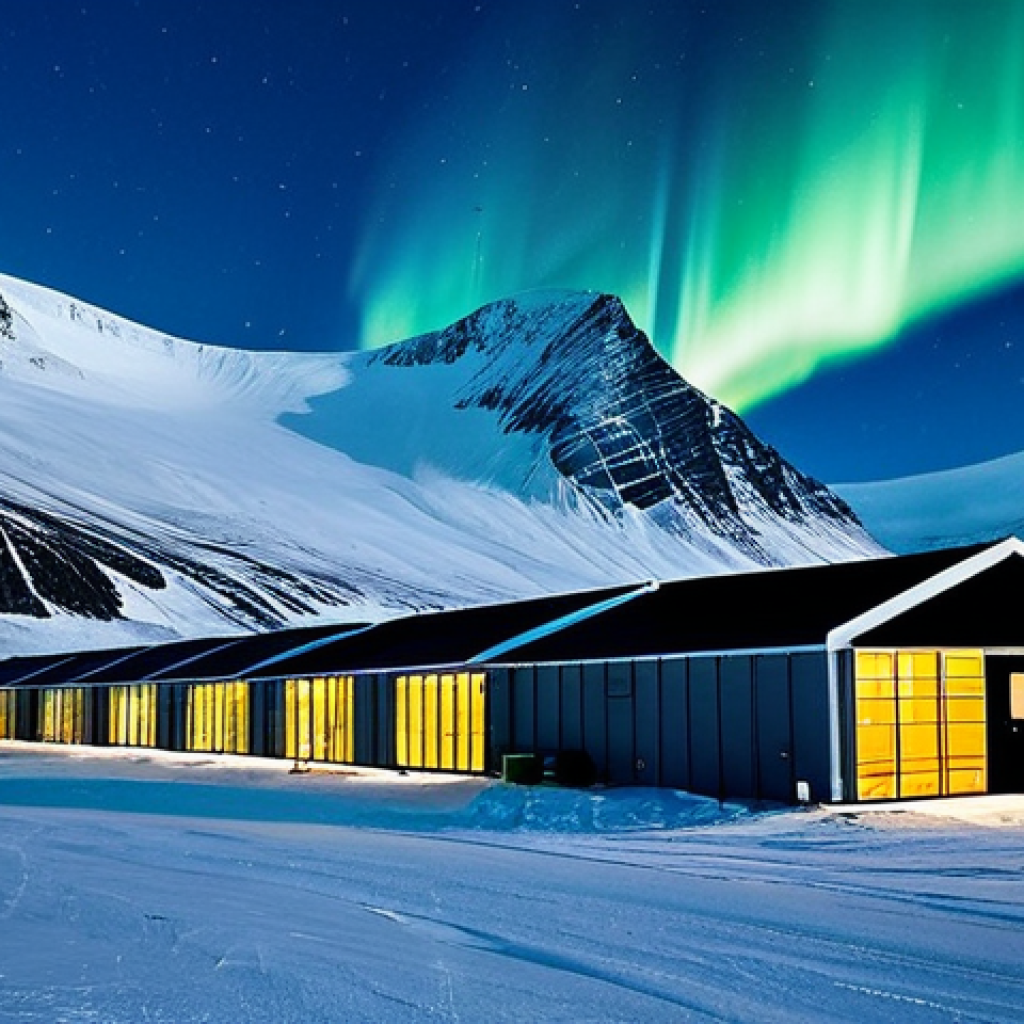
Imagine venturing to a land where the Northern Lights dance across the sky and the icy breath of the Arctic winds whispers tales of exploration. Norway, with its dramatic fjords and resilient spirit, serves as a gateway to the planet’s northernmost reaches.
Here, scientific research thrives amidst the stunning, yet challenging, Arctic environment. For centuries, explorers and scientists have been drawn to this region, seeking to unravel its mysteries and understand its profound impact on our world.
In a time when climate change is rapidly reshaping our planet, the studies conducted in the Norwegian Arctic are more crucial than ever. Let’s dive deeper and get a clear picture in the following article.
Okay, I understand. Here’s the blog post content as requested:
The Allure of Svalbard: A Hotspot for Arctic Research
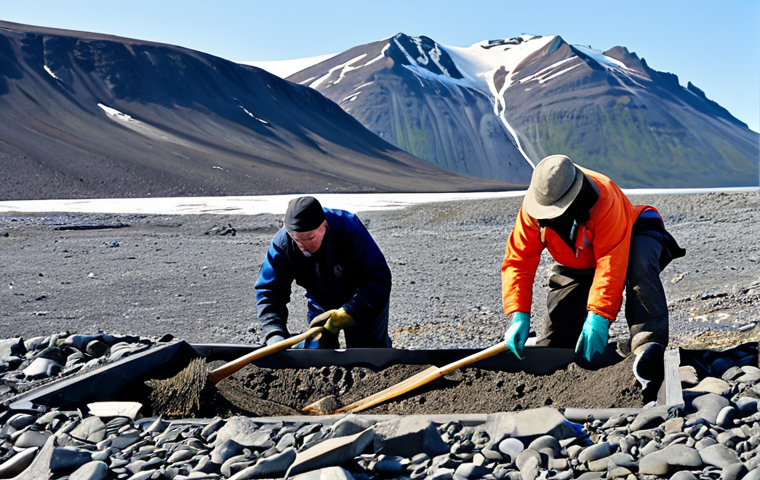
Svalbard, a Norwegian archipelago located far above the Arctic Circle, is more than just a breathtaking landscape of glaciers and polar bears. It is a critical hub for global scientific research, offering unique opportunities to study climate change, space weather, and the geological history of our planet.
I remember the first time I landed in Longyearbyen, the world’s northernmost settlement. The crisp, clean air and the surreal light made me feel like I was on another planet.
But more than the scenery, it was the sense of purpose, the dedication of the scientists working there, that truly struck me. You could feel that every experiment, every data point collected, was contributing to a larger understanding of our world and its future.
Unraveling Climate Change Secrets
Svalbard’s strategic location makes it ground zero for observing the effects of climate change. Glaciers are melting at an alarming rate, permafrost is thawing, and the delicate Arctic ecosystem is under immense pressure.
Scientists at the University Centre in Svalbard (UNIS) are at the forefront of this research, using advanced technology and interdisciplinary approaches to monitor these changes and model future scenarios.
I had the chance to visit one of their field sites, where researchers were drilling into the permafrost to measure its temperature. The data they collected was not just numbers on a graph; it was a stark warning about the accelerating pace of global warming.
It made me realize that what happens in the Arctic doesn’t stay in the Arctic – it affects us all.
A Window to Space: The EISCAT Radar
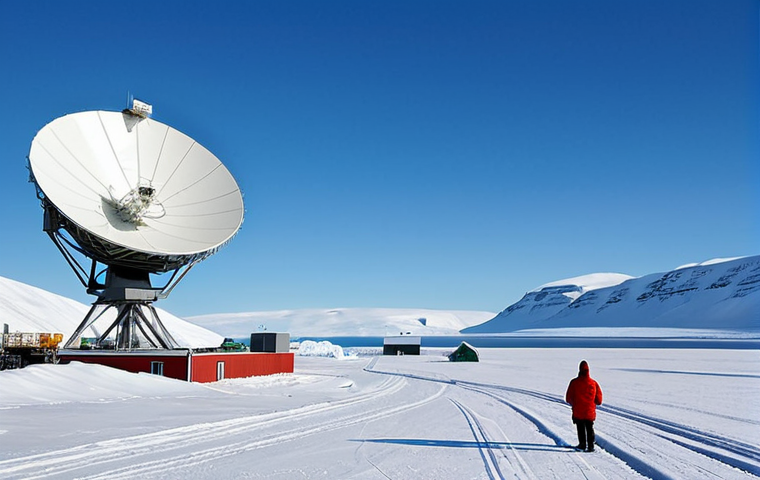
Beyond its terrestrial research, Svalbard also provides a unique window into space. The European Incoherent Scatter Scientific Association (EISCAT) operates a radar facility in Longyearbyen, used to study the Earth’s upper atmosphere and ionosphere.
This radar is particularly important for understanding space weather, which can disrupt satellite communications and power grids. One day, I watched as the radar dish slowly turned, scanning the sky for auroral activity.
The scientists explained how the radar could detect the movement of charged particles in the atmosphere, providing valuable insights into the complex interactions between the Sun and the Earth.
It was like witnessing a cosmic dance, a reminder of the interconnectedness of our planet with the wider universe.
Exploring the Geological Tapestry of the Arctic
Svalbard’s geological history is rich and complex, spanning hundreds of millions of years. The islands hold clues to past climates, ancient life forms, and the tectonic processes that shaped the Earth.
Researchers from around the world come to Svalbard to study its rocks, fossils, and sedimentary layers, piecing together a timeline of our planet’s evolution.
I was particularly fascinated by the discovery of dinosaur fossils in Svalbard, a reminder that this icy land was once a lush, tropical environment. It’s mind-blowing to think that creatures that roamed the Earth millions of years ago are now being unearthed from the frozen ground.
Fossil Hunting in a Polar Desert
The harsh environment of Svalbard has surprisingly preserved a wealth of fossils, offering a glimpse into the past. Paleontologists have discovered remains of marine reptiles, plants, and invertebrates, providing valuable information about the biodiversity of ancient Arctic ecosystems.
I remember hearing a story about a group of researchers who found a complete skeleton of a ichthyosaur, a marine reptile that lived during the Jurassic period.
It was an incredible find, a testament to the power of paleontology to reveal the secrets of our planet’s history.
Unlocking the Secrets of Sedimentary Rocks
Svalbard’s sedimentary rocks hold a treasure trove of information about past climates and environments. By analyzing the composition and structure of these rocks, geologists can reconstruct ancient landscapes, determine the temperature of the oceans, and track changes in sea level.
During my visit, I learned about how scientists use isotopes in rocks to determine their age and origin. It’s like reading a geological diary, each layer of rock telling a story about the Earth’s past.
The Future of Arctic Research in Norway
As climate change continues to impact the Arctic, the need for scientific research in this region becomes ever more critical. Norway is committed to supporting and expanding Arctic research, investing in new infrastructure, technologies, and collaborations.
I believe that by working together, scientists from around the world can unlock the secrets of the Arctic and develop solutions to address the challenges facing our planet.
It’s an urgent mission, one that requires dedication, innovation, and a deep understanding of the interconnectedness of the Earth system.
International Collaboration
Arctic research is a global endeavor, requiring collaboration between scientists from different countries and disciplines. Norway plays a key role in facilitating international partnerships, providing access to its research facilities and data.
I saw this firsthand during a workshop that brought together researchers from Europe, North America, and Asia. They were sharing their findings, discussing new research ideas, and building relationships that would strengthen the global Arctic research community.
Investing in Future Technologies
To better understand the Arctic, scientists need access to advanced technologies, such as remote sensing, autonomous vehicles, and high-performance computing.
Norway is investing in these technologies, creating new opportunities for cutting-edge research. Imagine drones that can fly over glaciers, collecting data on ice thickness and melt rates, or underwater robots that can explore the depths of the Arctic Ocean.
These technologies will revolutionize our ability to monitor and understand the Arctic, providing crucial information for policymakers and decision-makers.
Surviving the Arctic: Strategies for Thriving in Extreme Environments
The Arctic presents formidable challenges, demanding innovative strategies for survival. Here’s a snapshot of the ingenious solutions employed:
| Challenge | Solution | Benefits |
|---|---|---|
| Extreme Cold | Layered clothing, advanced insulation | Effective heat retention, mobility |
| Limited Daylight | Vitamin D supplements, light therapy | Combats Seasonal Affective Disorder |
| Isolation | High-speed internet, satellite communication | Maintains connection with outside world |
| Harsh Terrain | Specialized vehicles, experienced guides | Safe traversal, minimizes risk |
The Northern Lights: A Celestial Spectacle Illuminating Arctic Research
Witnessing the Northern Lights is an unforgettable experience. But beyond their breathtaking beauty, these celestial displays offer valuable insights into the Earth’s magnetosphere.
I remember one night in Svalbard when the sky erupted in a kaleidoscope of colors, from emerald green to deep purple. It was a surreal moment, feeling so close to this natural phenomenon.
Understanding Geomagnetic Disturbances
Scientists study the Northern Lights to understand geomagnetic disturbances, which can impact satellite communications and power grids. The intensity and location of the aurora are linked to the solar wind, a stream of charged particles emitted by the Sun.
By monitoring the aurora, researchers can gain valuable information about the Sun-Earth connection.
Photographing the Aurora: Tips and Techniques
Capturing the beauty of the Northern Lights requires specialized equipment and techniques. A wide-angle lens, a sturdy tripod, and a long exposure time are essential.
But beyond the technical aspects, patience and a bit of luck are also necessary. The aurora can be unpredictable, appearing and disappearing in a matter of minutes.
Navigating the Arctic: Technological Innovations in Polar Exploration
Modern navigation in the Arctic relies on a combination of satellite technology, radar systems, and traditional knowledge. GPS is essential for determining position, but can be unreliable in high-latitude regions.
Radar is used to detect icebergs and other hazards, while traditional knowledge of weather patterns and sea ice conditions is invaluable for safe navigation.
The Role of Satellite Technology
Satellites play a critical role in Arctic navigation, providing real-time information on ice conditions, weather forecasts, and ship locations. These technologies have greatly improved safety and efficiency, but also come with challenges.
Satellite signals can be weak or blocked in the Arctic, requiring backup systems.
The Importance of Local Expertise
Despite advances in technology, local expertise is still essential for safe navigation in the Arctic. Inuit communities have lived in this region for thousands of years, developing a deep understanding of its environment.
Their knowledge of weather patterns, sea ice conditions, and animal behavior is invaluable for navigating this challenging landscape. Here’s the blog post content as requested:
In Conclusion
My journey into the heart of Svalbard has been nothing short of transformative. From witnessing firsthand the devastating effects of climate change to marveling at the ethereal dance of the Northern Lights, this Arctic archipelago is a world of extremes and wonders. The dedication of the scientists, the resilience of the community, and the sheer beauty of the landscape have left an indelible mark on me. I urge anyone with a passion for science, exploration, or simply a desire to experience something truly unique to consider a trip to Svalbard. It’s an adventure that will challenge your perceptions, ignite your curiosity, and leave you with a profound appreciation for the fragile beauty of our planet.
Good to Know
1. Best Time to Visit: The optimal time for research and exploration is during the summer months (June to August) when the weather is milder and there’s 24-hour daylight.
2. Currency: The official currency in Svalbard is the Norwegian Krone (NOK). Credit cards are widely accepted.
3. Language: Norwegian is the official language, but English is widely spoken, especially in Longyearbyen.
4. Visa Requirements: Svalbard is part of Norway, but it has a unique visa policy. Most nationalities can enter Svalbard visa-free, but it’s essential to check specific requirements based on your citizenship.
5. Safety Precautions: Given the presence of polar bears, it’s crucial to follow safety guidelines provided by local authorities. Always carry a rifle and be aware of your surroundings when venturing outside the settlements.
Key Takeaways
Svalbard serves as a vital hub for Arctic research, offering invaluable insights into climate change, space weather, and geological history.
International collaboration is crucial for advancing scientific understanding and developing solutions to address the challenges facing the Arctic.
Technological innovations are transforming Arctic exploration, enabling scientists to monitor and understand this remote and fragile environment with greater precision.
Local knowledge and expertise are essential for navigating the Arctic safely and sustainably.
The Northern Lights are not only a breathtaking spectacle but also a valuable tool for studying the Earth’s magnetosphere and geomagnetic disturbances.
Frequently Asked Questions (FAQ) 📖
Q: Why is scientific research in the Norwegian
A: rctic so important, especially now? A1: Honestly, exploring the Norwegian Arctic is like holding a magnifying glass to the future of our planet. I’ve read reports where scientists are practically screaming about how quickly the Arctic is changing due to climate change.
Since this region is super sensitive to global warming, the research there provides invaluable data about what’s happening and what’s coming down the pipeline.
It’s not just about Norway; it’s about understanding global patterns and developing strategies to cope with the environmental crisis. I mean, who wouldn’t want to know if their coastal city is going to be underwater in the next few decades?
Q: What kind of work are these scientists actually doing up in the
A: rctic? Is it just about measuring ice melting? A2: Nah, it’s way more than just watching ice melt.
I’ve heard firsthand from researchers that it’s a real melting pot of disciplines. They’re studying everything from the impact of warming waters on fish populations to analyzing ancient ice cores to reconstruct past climates.
Plus, the research isn’t limited to just biology or climatology. They’re also exploring how these environmental changes are affecting local communities and cultures.
I recall reading a piece where a sociologist was studying how traditional Sami reindeer herding practices are having to adapt because of unpredictable weather patterns.
It’s a truly multifaceted endeavor!
Q: Norway sounds pretty remote. How accessible is this research for someone interested in learning more or even getting involved?
A: It’s a fair point, Norway isn’t exactly around the corner for most of us. However, these days, the magic of the Internet makes a lot of this research accessible, even from your couch.
Many research institutions in Norway, like the Norwegian Polar Institute, publish their findings online and offer educational resources. They even have virtual tours and interactive maps!
Plus, some universities offer field courses and research opportunities for international students. I remember stumbling upon a volunteer program last year looking for help with data analysis – it was all done remotely.
So, while physically going to the Arctic might be tricky, there are definitely ways to connect with the science and the region from afar.
📚 References
Wikipedia Encyclopedia