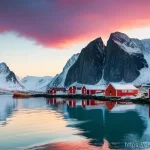
Hey there, fellow adventurers and dreamers! Have you ever scrolled through breathtaking photos of majestic fjords and vibrant Northern Lights and thought, “What if I could actually *live* there?” Well, for many of us, the allure of Norway isn’t just about the stunning landscapes; it’s also about world-class education and an unparalleled quality of life.
I’ve been getting so many messages lately from you all asking about making that leap, especially when it comes to higher education. It feels like more and more people are discovering the incredible value of a Norwegian degree, often with free tuition at public universities—yes, you heard that right!

It truly changes the game for international students. But navigating the admissions process can feel like charting a course through a new fjord, right?
From understanding specific academic requirements to figuring out application deadlines, it can seem a bit daunting at first glance. However, trust me, with the right information, it’s absolutely achievable, and the rewards are immeasurable.
This isn’t just a trend; it’s a smart move for your future. Let’s delve into everything you need to know about getting into university in Norway, so you can start planning your amazing journey.
Embracing the Academic Journey: Your First Steps
Understanding the Norwegian Higher Education System
Let’s kick things off by getting a grip on how Norway’s higher education system actually works, because it’s probably different from what you’re used to!
What I’ve consistently found amazing is its strong emphasis on research, innovation, and a very student-centric approach. Unlike some systems that feel rigid and hierarchical, Norwegian universities often foster an environment where students are encouraged to think critically, participate actively, and engage in practical, real-world projects.
I remember talking to a friend who studied environmental science in Oslo, and she was always raving about how accessible her professors were and how much hands-on fieldwork she got to do.
It’s not just about memorizing facts; it’s about understanding, questioning, and contributing. Public universities here are mostly funded by the government, which, as many of you know, historically meant no tuition fees for *anyone*, including international students.
This policy has been a game-changer for so many aspiring students from around the globe, making quality education incredibly accessible. While there have been some recent shifts regarding tuition for non-EU/EEA students, the core values of high-quality education and a supportive learning environment remain steadfast.
It’s truly a system built on trust and a commitment to intellectual growth, which I personally find incredibly refreshing.
Choosing Your Perfect Program and University
This part is crucial, and honestly, it’s where a lot of the excitement really begins! You’ve got to do your homework to find the program and university that are the perfect fit for you.
Norway boasts a range of institutions, from large, comprehensive universities like the University of Oslo or NTNU (Norwegian University of Science and Technology) to specialized university colleges focusing on specific fields.
My advice? Don’t just look at the university’s ranking – though that’s a good starting point – dive deep into the specific program curricula. What courses are offered?
Are there opportunities for internships or exchange programs? What research is the faculty involved in? For instance, if you’re passionate about marine biology, a university on the coast might offer more hands-on opportunities than one inland, right?
I always tell people to imagine themselves living and studying there. Think about the city, the student life, the climate. Do you thrive in a bustling urban environment like Bergen, or would you prefer the slightly more relaxed, nature-adjacent vibe of Tromsø?
Visiting their websites, exploring student forums, and even reaching out to current international students (LinkedIn is great for this!) can give you invaluable insights.
It’s about finding that sweet spot where your academic ambitions align perfectly with a vibrant student experience.
Decoding the Application Puzzle: What You Need to Know
Essential Documents and Credentials
Alright, let’s get down to the nitty-gritty of what you actually need to compile for your application. This can feel like a mountain of paperwork, but trust me, breaking it down makes it manageable.
First and foremost, you’ll need certified copies of your academic transcripts and diplomas from all previous education. This isn’t just a casual photocopy; often, they need to be officially stamped and signed by the issuing institution or a recognized authority.
If your documents aren’t in English or Norwegian, you’ll definitely need official translations. I once helped a friend navigate this, and we learned the hard way that a simple translation isn’t enough – it needs to be done by an authorized translator.
Then there’s proof of English proficiency, which we’ll delve into more later, but typically this means a valid IELTS or TOEFL score. Some programs might also ask for a CV or resume, highlighting your work experience, volunteer activities, and any relevant achievements.
Don’t underestimate the power of a well-structured CV; it’s your chance to present yourself beyond just grades. Specific programs, especially at the Master’s or PhD level, might also require letters of recommendation from professors or employers.
Always double-check each university’s specific requirements because they can vary slightly from one institution or program to another. Being meticulous here saves you a lot of stress down the line!
Navigating the Online Application Portals
Most Norwegian universities use online application portals, which are generally quite user-friendly, but they do require attention to detail. The main national admission service for undergraduate studies is through Samordna Opptak (The Norwegian Universities and Colleges Admission Service), though many master’s and PhD programs have direct applications through the individual university’s own system.
When I applied for a summer program once, I remember spending ages making sure every single field was filled out correctly and that all my uploaded documents were in the right format.
It’s like filling out a highly detailed online form for a job, but with your entire academic future on the line! You’ll create an account, fill in your personal details, academic history, and then meticulously upload all your supporting documents.
Pay close attention to file sizes and formats – they usually specify PDFs. A common mistake I’ve seen is people rushing through this part, leading to errors or missing information.
My personal tip? Start early, save your progress frequently, and maybe even have a friend or family member review it before you hit “submit.” A fresh pair of eyes can catch things you might have overlooked.
It really makes a difference to present a complete and polished application.
Mastering the Language Challenge: English or Norwegian?
Meeting English Proficiency Requirements
Let’s talk about language, specifically English proficiency, because for most international students pursuing degrees in Norway, this is a key hurdle.
While Norwegian is the official language, a vast number of Bachelor’s and especially Master’s programs are taught entirely in English. This is fantastic news, making Norway very accessible for English speakers!
However, you’ll need to prove your English language skills, usually through standardized tests like IELTS or TOEFL. Universities have specific score requirements, which you’ll find clearly stated on their admission pages.
For example, a common requirement might be an IELTS score of 6.0 or 6.5, or a TOEFL iBT score of around 80-90. Don’t just aim for the minimum; a higher score can sometimes make your application stand out, showing a stronger command of the language, which is crucial for academic success.
I recall a friend who was nervous about her IELTS score, but she put in extra study time, got a really solid score, and told me it boosted her confidence immensely once she started her classes.
Some applicants from certain English-speaking countries, or those who have completed their previous degree taught entirely in English, might be exempt from these tests.
Always check if you qualify for an exemption, as it can save you time and money.
Embracing Norwegian: A Cultural Immersion
While many programs are in English, I can’t stress enough how much learning even a little Norwegian will enrich your experience. Seriously, it’s not just about academics; it’s about life outside the classroom.
Norwegians are generally excellent English speakers, so you won’t struggle with daily communication. However, making an effort to learn Norwegian shows respect for the culture and can open up so many doors socially and professionally.
Imagine being able to chat with locals at the grocery store, understand snippets of conversations on the bus, or even read local news! It creates a much deeper connection to your new home.
Many universities offer free or subsidized Norwegian language courses for international students, which I highly recommend taking advantage of. I’ve heard countless stories from students who initially thought they wouldn’t need Norwegian, only to realize later how much they wished they had started sooner.
It’s also incredibly helpful if you plan to work part-time or seek post-graduation employment in Norway, as many employers prefer candidates with at least basic Norwegian skills.
Think of it as an investment not just in your education, but in your entire Norwegian adventure.
Beyond Transcripts: Crafting a Compelling Application
The Power of Your Motivation Letter
Beyond your grades and test scores, your motivation letter (sometimes called a statement of purpose) is your golden ticket to truly shine. This isn’t just a formality; it’s your personal narrative, your chance to tell the admissions committee who you are, why you want to study *this specific program* at *this specific university* in *Norway*, and what makes you a unique candidate.
I’ve always emphasized that this letter needs to be authentic, articulate, and passionate. Avoid generic statements and clichés. Instead, focus on specific experiences, academic interests, and future aspirations that directly connect to the program.
Did a particular course module spark your interest? Have you been inspired by a specific research project coming out of that university? Tell them!
Show them you’ve done your homework and that your desire to study there is genuine and well-considered. I remember spending days crafting my own motivation letter for a study abroad program, and the effort paid off.
It’s where you can demonstrate critical thinking, communicate your personality, and make a lasting impression. Don’t just reiterate your CV; elaborate on why your experiences are relevant and how they’ve shaped your academic trajectory.
Highlighting Relevant Experience
This goes hand-in-hand with your motivation letter but deserves its own spotlight. Universities, especially at the Master’s and PhD levels, are increasingly looking for applicants who bring more than just good grades to the table.
They want to see how you’ve applied your knowledge, developed skills, and shown initiative outside of traditional coursework. This could be anything from internships, volunteer work, research projects, participation in student organizations, or even relevant part-time jobs.
Did you lead a team project? Did you organize an event? Did you contribute to a community initiative?
These experiences demonstrate soft skills like leadership, teamwork, problem-solving, and time management – qualities highly valued in both academic and professional settings.
When describing these experiences, don’t just list them; explain what you learned, what challenges you overcame, and how they relate to your chosen field of study.
For instance, if you’re applying for a program in renewable energy, highlighting your involvement in a campus sustainability project or an internship with a solar panel company would be incredibly impactful.
It shows initiative and a practical understanding of your field, making your application much more robust and memorable.
The Financials of Fjord Living: Funding Your Education
Understanding Tuition Fees (or Lack Thereof!)
Okay, let’s talk money, because for many, this is where Norway truly shines. For decades, public universities in Norway offered free tuition to all students, regardless of nationality.
This was a massive draw and frankly, life-changing for many international students. However, there’s been a significant change recently. As of the academic year 2023-2024, students from outside the EU/EEA and Switzerland are now required to pay tuition fees at public universities.
This was quite a shift, and I know it’s caused some concern among prospective students. But don’t let this deter you entirely! While fees are now in place, many universities are still relatively affordable compared to institutions in other popular study destinations.
Plus, private universities have always charged tuition. It’s essential to check the specific fees for your chosen program, as these can vary. Some programs might have higher fees due to specialized equipment or resources.
I’ve seen fees ranging anywhere from around 8,000 to 20,000 Euros per academic year, which, while not free, is often still competitive. My advice is to directly consult the university’s admissions page for the most up-to-date and accurate fee information.
Don’t assume anything; verify everything!
Scholarships and Living Costs
Even with tuition fees, don’t despair! There are still avenues to make your Norwegian dream a reality. Scholarships are definitely something you should explore.
Many Norwegian institutions and external organizations offer scholarships specifically for international students, some covering tuition fees, others providing stipends for living costs, or both.
These can be merit-based, program-specific, or even country-specific. You’ll need to be proactive in your search; check university websites, national scholarship databases, and even look into scholarships offered by organizations in your home country for studying abroad.
Beyond tuition, you also need to factor in living costs, which are undeniably higher in Norway compared to many other countries. This is something I always highlight to prospective students.
Expect to budget for accommodation, food, transportation, textbooks, and personal expenses. A conservative estimate for living expenses could be around NOK 12,000-15,000 per month (roughly 1,100-1,400 USD or 1,000-1,300 EUR, though currency rates fluctuate).
Cities like Oslo and Bergen will be at the higher end. Student housing can help reduce costs significantly, so apply for that as early as possible! Many students also take on part-time jobs, though there are regulations on how many hours international students can work.
Planning your budget meticulously is key to a stress-free experience.
| Category | Estimated Monthly Cost (NOK) | Notes |
|---|---|---|
| Accommodation (Student Housing) | 4,000 – 7,000 | Varies by city and type of room; apply early! |
| Food & Groceries | 3,000 – 4,500 | Cooking at home saves a lot! |
| Public Transportation | 500 – 1,000 | Student discounts often available. |
| Utilities & Internet | 500 – 1,000 | Often included in student housing rent. |
| Books & Materials | 300 – 700 | Can vary greatly by program. |
| Personal Expenses & Leisure | 1,500 – 3,000 | Movies, cafes, activities. |
| Total Estimated Monthly Living Costs | 9,800 – 17,200 | Excluding tuition fees. Budget wisely! |
Timing Your Grand Entrance: Key Dates and Deadlines
Planning Your Application Timeline
When it comes to applying to universities in Norway, timing truly is everything. Missing a deadline, even by a day, can mean waiting another entire year, and nobody wants that!
Norwegian universities generally have two main intake periods: autumn (August/September start) and spring (January/February start). The autumn intake is by far the most common, especially for full degree programs.
Application deadlines for the autumn intake typically fall between December 1st and March 15th of the preceding year. For example, if you want to start in August 2026, you’d likely need to apply between late 2025 and early 2026.
Spring intake deadlines are usually around September 1st to October 15th. It’s crucial to understand that these are often *final* deadlines, not suggested ones.
I always advise students to aim to submit their applications at least a few weeks before the official deadline. Why? Because you never know what technical glitches might pop up, or if you’ll discover a missing document at the last minute.
This buffer period can be a real lifesaver. Think of it like this: you’re trying to catch a ferry across a beautiful fjord, and you definitely don’t want to be running to the dock at the very last second.
Dealing with Conditional Offers
So, you’ve applied, and fingers crossed, you get an offer! But sometimes, this offer might be “conditional.” Don’t panic when you see that! A conditional offer means that you’ve been accepted, but there are still certain requirements you need to fulfill before your admission is finalized.
Common conditions include submitting your final degree certificate (if you applied before graduation), achieving a specific English test score, or completing a particular course.
I remember one student who got a conditional offer because her final university grades hadn’t been processed yet. She just needed to send in her official degree certificate once she had it.
The key here is to read your conditional offer letter very carefully and understand exactly what is required of you and by when. There will usually be a clear deadline for submitting these outstanding documents.
If you’re unsure about anything, don’t hesitate to contact the admissions office at the university. They are there to help! Proactively addressing these conditions ensures a smooth transition from a conditional offer to a full, unconditional acceptance, paving the way for your student visa application and your exciting journey to Norway.
Navigating Student Life: Settling into Your New Home
Finding Accommodation and Making Friends
Okay, you’ve been accepted – congratulations! Now comes the exciting part of actually moving and settling in. One of the biggest concerns for new international students is accommodation.
My strong recommendation? Apply for student housing as soon as you can! Student welfare organizations (Studentsamskipnaden, or SiO in Oslo) manage most student residences, offering furnished rooms or apartments that are often more affordable and socially vibrant than private rentals.
I’ve heard so many positive stories from students who found their closest friends in their student dorms – it’s a ready-made community! While private rentals are an option, they can be more expensive and harder to secure, especially without being physically present in Norway.
As for making friends, Norwegians can sometimes seem a bit reserved at first, but they are incredibly welcoming once you get to know them. Join student organizations, sports clubs, or volunteer groups.
Your university will likely have an international student office that organizes orientation programs and social events designed to help you integrate.
Step out of your comfort zone, say yes to invitations, and remember that everyone is just looking for connection. I truly believe that the effort you put into building your social network will be one of the most rewarding aspects of your time in Norway.
Embracing the Norwegian Lifestyle
Living in Norway is an experience unlike any other, and truly embracing the local lifestyle will make your journey so much richer. Get ready for incredible nature experiences – hiking, skiing, exploring fjords – because Norwegians absolutely love the outdoors, and you should too!
Invest in good quality outdoor gear, even if you’ve never hiked a day in your life; you’ll thank me later. Be prepared for the changing seasons, especially the long, dark winters and the magical, almost endless daylight of summer.
This seasonal shift really impacts daily life. Embrace “koselig” – a Norwegian concept similar to Danish “hygge,” meaning a feeling of coziness and warmth, often enjoyed with good company or by a fireplace.
Food culture here is perhaps less varied than in some major global cities, but there’s a strong emphasis on fresh, local produce, and delicious seafood.
Be mindful that alcohol can be quite expensive, and often regulated, which influences social gatherings. Most importantly, give yourself time to adjust.
There might be moments of cultural shock or homesickness, which is totally normal. But with an open mind, a willingness to try new things, and a good dose of patience, you’ll soon find yourself falling in love with the unique charm and high quality of life that Norway offers.
It’s an adventure waiting to happen!
Wrapping Up Your Norwegian Adventure
And there you have it, folks! Navigating the path to studying in Norway can feel like a grand expedition, but with careful planning and a dash of enthusiasm, it’s an incredibly rewarding journey. From deciphering the application documents to embracing the unique charm of Norwegian life, every step is an opportunity for growth and discovery. I truly believe that the effort you put in now will pay dividends in unforgettable experiences, invaluable knowledge, and a community of friends from around the world. So, take a deep breath, trust the process, and get ready to write your own amazing chapter in the land of fjords and northern lights. It’s an adventure I wholeheartedly recommend!
Useful Information to Know
1. Cost of Living: While tuition might be gone for some, Norway is known for its higher cost of living. Seriously, budgeting for essentials like food and transport is crucial. Learning to cook at home and taking advantage of student discounts can save you a pretty penny! I’ve found that being mindful of your spending habits from day one makes a huge difference in enjoying your time without constant financial stress.
2. Public Transportation is Excellent: Norway’s public transport system, especially in major cities, is incredibly efficient and reliable. Investing in a monthly student pass is often the most cost-effective way to get around, and it means you can leave the car worries behind. Plus, it’s a great way to see more of your new city!
3. Embrace the Outdoors (and the Weather): Norwegians live for the outdoors, regardless of the season! Pack good quality waterproof and warm clothing – trust me, you’ll need it. Even if you’re not an avid hiker or skier, joining in on outdoor activities is a fantastic way to connect with locals and truly experience the Norwegian way of life. It’s transformed my own perception of what “cold weather” means!
4. Healthcare Access: As an international student, understanding your healthcare rights is vital. Most students will be covered by the Norwegian National Insurance Scheme once registered, but it’s crucial to check the specific requirements and waiting periods. Don’t leave this to the last minute; peace of mind about your health is priceless.
5. Cultural Nuances: Norwegians value punctuality, directness, and often a more reserved demeanor in initial interactions. Don’t mistake their quietness for unfriendliness! They’re incredibly warm and loyal once you get to know them. Participating in social events, joining student groups, and showing an interest in their culture will help you build those connections. I’ve learned that a simple “Hei!” (Hi!) and a genuine smile can go a long way.
Key Takeaways
Embarking on your academic journey in Norway is a decision that opens up a world of unparalleled opportunities and experiences. First, meticulously research programs and universities, ensuring a perfect fit for your aspirations. Second, gather all necessary documents well in advance and meticulously complete your application, paying close attention to deadlines. Don’t underestimate the power of a compelling motivation letter and highlighting relevant experiences to make your application truly shine. Third, while many programs are in English, making an effort to learn Norwegian will profoundly enrich your cultural immersion and future prospects. Finally, be proactive in securing funding through scholarships and meticulously planning your living budget, as Norway’s cost of living requires careful consideration. Remember, every step of this journey, from application to settling in, is part of a grand adventure that will shape you in incredible ways. Embrace the challenges, soak in the unique culture, and prepare for an unforgettable chapter in your life.
Frequently Asked Questions (FAQ) 📖
Q: Is tuition truly free for international students in Norway, or is that just a myth now?
A: Oh, this is probably the BIGGEST question I get these days, and honestly, the answer has gotten a little more complex recently! I remember when Norway was famous for offering free tuition to everyone, no matter where you came from.
That was a game-changer! However, things have shifted a bit. As of autumn 2023, if you’re a student from outside the EU/EEA or Switzerland, you will typically need to pay tuition fees at public universities.
It was a bit of a shock for many, myself included, but it’s the new reality. These fees can range anywhere from NOK 80,000 to NOK 150,000 per year for Bachelor’s programs and NOK 90,000 to NOK 200,000 for Master’s programs, varying by institution and specific program.
Now, don’t let that completely derail your dreams! Here’s the good news: if you’re a citizen of an EU/EEA country or Switzerland, you’re still exempt from tuition fees at public universities.
And even if you’re not, there are some private universities that have always charged fees, sometimes higher than the new public university fees, so it’s all about checking your options.
Plus, scholarships and funding opportunities do exist, though they can be competitive. My advice? Always check the specific university and program you’re interested in – they’ll have the most up-to-date fee information.
And remember, even with fees, a Norwegian degree can offer incredible value for your future career!
Q: What are the main academic requirements for international students looking to get into a Norwegian university?
A: This is where the rubber meets the road, right? From what I’ve seen and heard from students who’ve successfully navigated this, the academic requirements are pretty straightforward, but they need careful attention.
For starters, you’ll definitely need to have completed upper secondary education, which should be equivalent to passing the final exam in a Norwegian high school.
This is often referred to as the “Higher Education Entrance Qualification” or GSU. Some countries might even require an additional year of university study on top of your high school diploma to meet this equivalence, so it’s really important to check the “GSU list” on official university websites or Study in Norway’s portal for your specific country.
Beyond that, if you’re eyeing an English-taught program (and trust me, there are some fantastic ones!), you absolutely must prove your English language proficiency.
Think tests like TOEFL, IELTS, PTE Academic, or C1 Advanced. The scores required can actually vary a bit between institutions and even specific programs, so always double-check.
For Master’s degrees, you’ll need an undergraduate or Bachelor’s degree (typically at least 3 years in duration) with a strong academic record, and the courses you’ve taken should be relevant to your chosen Master’s program.
Some programs might even have a minimum grade point average requirement, often a C or better on the ECTS scale. It sounds like a lot, but break it down, and you’ll find it manageable!
Q: When should I apply, and what’s the application process like for international students?
A: Planning is everything when it comes to applications, and Norway is no exception! From my experience, missing a deadline can be the most frustrating part.
Generally, if you’re planning to start in the autumn semester, the application period for international students (especially non-EU/EEA) usually runs from around December to March, with specific deadlines often falling in December or January.
For EU/EEA students, deadlines might be a bit later, often in February or March. My golden rule? Start early.
Like, yesterday! The process itself is typically done through the individual university’s online application portal. Many Norwegian universities use a system called “SøknadsWeb.” You’ll register an account, fill in your personal details, and then upload all your required documents.
What do you need? Think academic transcripts and diplomas, proof of your English proficiency, a copy of your passport, and often a statement of purpose or a motivation letter.
For some specific countries like China or Pakistan, you might even need verification reports for your educational documents. What’s interesting is that on SøknadsWeb, you typically upload everything and there isn’t usually a “submit” button that locks it in; you can often edit it right up until the deadline.
But please, don’t leave it to the last minute! Giving yourself ample time to gather documents and review your application will save you so much stress and help you put your best foot forward.